

No-Fault vs At-Fault Auto Insurance, Which Saves You More?
Auto insurance rules shift from state to state, and one of the biggest dividing lines is how a state assigns responsibility after a crash. Some states follow at-fault rules, where the person who caused the wreck is responsible for losses. Others use no-fault rules, where medical costs are handled by each driver’s own policy regardless of who triggered the collision. These systems influence what drivers pay, how claims unfold, and what protections a policy must include.
This guide breaks down how each structure functions, lists the states in each category, and highlights how these systems affect premiums, claims, and coverage decisions.
How At-Fault States Handle Accidents

Instagram | @EyeEm | Drivers in at-fault states carry coverage that protects against costly accident claims.
At-fault (tort) states hold the responsible driver financially accountable for bodily injuries and property damage. Liability insurance steps in to pay the other party’s medical bills, lost income, and repairs.
Because compensation depends on proving who caused the crash, evidence like police reports, witness statements, and photographs often becomes part of the process. Disagreements about responsibility can lead to lawsuits, which is why litigation is more common in these states.
Rates in at-fault states often differ based on:
1. How frequently the drivers are found responsible for crashes
2. The size of payouts tied to injuries and property losses
3. The likelihood of lawsuits seeking compensation for pain and suffering
How No-Fault States Handle Accidents
No-fault states shift initial medical and income-loss coverage to each driver’s own policy through personal injury protection (PIP). This applies regardless of who caused the crash. The system is designed to speed up medical payments and reduce legal battles for minor injuries.
However, no-fault rules usually limit when an injured party can sue for non-economic damages. In many states, a “serious injury” threshold must be met before a lawsuit for pain and suffering can move forward.
Property damage claims, including vehicle repairs, still rely on determining fault, but the approach to bodily injury claims is what sets these states apart.
States That Use Each System
No-Fault States:
Florida, Hawaii, Kansas, Kentucky, Massachusetts, Michigan, Minnesota, New Jersey, New York, North Dakota, Pennsylvania, and Utah.
At-Fault States:
Alabama, Alaska, Arizona, Arkansas, California, Colorado, Connecticut, Delaware, Georgia, Idaho, Illinois, Indiana, Iowa, Louisiana, Maine, Maryland, Missouri, Mississippi, Montana, Nebraska, Nevada, New Hampshire, New Mexico, North Carolina, Ohio, Oklahoma, Oregon, Rhode Island, South Carolina, South Dakota, Tennessee, Texas, Vermont, Virginia, Washington, West Virginia, Wisconsin, and Wyoming.
While the majority of states follow at-fault rules, no-fault states maintain unique systems designed to streamline medical claims and reduce litigation.
How Fault Impacts Premiums and Claims
The structure a state uses can reshape both premiums and claim behavior.
In no-fault states:
PIP adds required medical coverage to each policy, which can increase base rates. Lawsuit thresholds may lower legal exposure for small claims, but higher coverage requirements can raise overall costs.
Some drivers still experience rate changes even if they weren’t responsible for the accident, since claims draw from their own policy.
In at-fault states:
Liability limits matter because lawsuits can involve medical bills, vehicle repairs, and non-economic damages. A driver found responsible for a crash can face sharper premium increases. Accident history often plays a major role in rate adjustments.
Additional factors:

Freepik | senivpetro | Drivers should understand insurance laws to choose the right coverage confidently.
1. Moving between systems (for example, relocating from a no-fault to an at-fault state) often changes required coverages and overall pricing.
2. A widely cited historical comparison found that no-fault states had premiums about 19% higher than tort states on average.
3. No-fault systems can lead to more complex medical coverage structures, while at-fault states may increase exposure to lawsuits.
What Drivers Should Keep in Mind
The rules in a state directly shape how coverage is designed and how claims unfold.
1. State requirements – No-fault states mandate PIP, while at-fault states focus on liability protection.
2. Limits on legal action – No-fault thresholds can restrict lawsuits for pain and suffering unless injuries reach a legally defined severity.
3. Claim history – Fault-based crashes in at-fault states can lead to significant premium spikes. In no-fault states, medical claims may influence rates even without fault.
4. Policy design – Coverage must align with how the state handles bodily injury and property damage.
5. Relocation – Changing states may require adjusting limits, adding PIP, or modifying coverage levels to meet new rules.
Whether a driver lives in a no-fault system or an at-fault system, the state’s legal structure shapes coverage needs, claim procedures, and long-term costs. Knowing how each framework works helps drivers choose appropriate limits, understand how claims may unfold, and anticipate how an accident could affect future premiums.
More inCar Insurance
-
`
 Understanding the Difference Between Motorcycle and Car Engines
Cars and motorcycles dominate modern roads, each powered by engines designed to turn fuel into motion through controlled combustion. At a...
May 10, 2026 -
`
 HSE Bus Driver Faces Charges After Student Caught Her Drinking Vodka on Duty
A routine school ride turned into a serious safety scare in Fishers, Indiana. A Hamilton Southeastern Schools bus driver now faces...
May 8, 2026 -
`
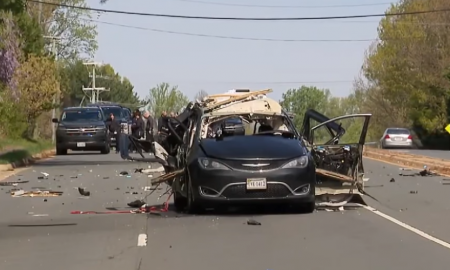 Woman Injured After Minivan Filled With Propane Gas Explodes in Virginia
A quiet morning in Burke, Virginia turned chaotic on April 9 when a Chrysler Pacifica erupted in a powerful explosion around...
May 1, 2026 -
`
 Ignoring ‘Gamified’ Trading Apps and Opting for ‘Boring’ Cash Flow is a Smart Investment Strategy
The modern investing world looks more like a game than a plan for building wealth. Bright colors, instant rewards, and constant...
April 30, 2026 -
`
 Why Holding Too Much Cash During Inflation Can Quietly Reduce Wealth
Cash often feels like a safe haven when prices rise and economic headlines turn uneasy. Bank balances stay steady, there’s no...
April 25, 2026 -
`
 Most Expensive & Cheapest Car Insurance Costs by State in 2026
Car insurance costs in 2026 feel anything but predictable, and where you live plays a bigger role than most people expect....
April 23, 2026 -
`
 How Inflation Impacts Car Insurance Costs and What Drivers Can Do
Insurance premiums tend to move with the broader economy. As everyday costs rise, insurers face higher claim payouts—and those increases show...
April 19, 2026 -
`
 YouTube is Coming to Android Auto, BUT the Most Important Feature Is Missing?
YouTube is finally coming to Android Auto, and at first glance, that sounds like a big deal. People have waited for...
April 17, 2026 -
`
 New Rule Change Leads to Thousands of Driving Test Cancellations
A recent rule change has created major disruption for learner drivers, with more than 1,200 driving tests canceled in just two...
April 10, 2026
More From CashRoadster
-
 What Qualifies a Vehicle for Classic Car Insurance?
Owning a classic car is about more than preserving an older vehicle. Many enthusiasts appreciate vintage automobiles because they are easier...
Car InsuranceJuly 12, 2026 -
 NHTSA Launches ‘Special Investigation’ After Fatal Tesla Crash Into Texas Home
A deadly Tesla crash in Texas is now at the center of a federal safety investigation. The U.S. National Highway Traffic...
Auto NewsJuly 8, 2026 -
 “Grand Theft Auto VI” Cover Art Revealed
Rockstar Games gave fans a fresh look at “Grand Theft Auto VI” after releasing the game’s official cover art on Thursday....
Auto NewsJuly 5, 2026 -
 Why ‘Super Commuting’ Is Becoming a New Normal in Northern California
For thousands of workers across Northern California, a long drive to work is no longer an occasional inconvenience. It has become...
DrivingJuly 3, 2026 -
 Why Advanced Headlights Used Worldwide Are Still Restricted in America
Night driving was once associated with quieter roads and a calmer driving experience. Today, many motorists face a different reality. Intense...
DrivingJune 28, 2026
You must be logged in to post a comment Login