
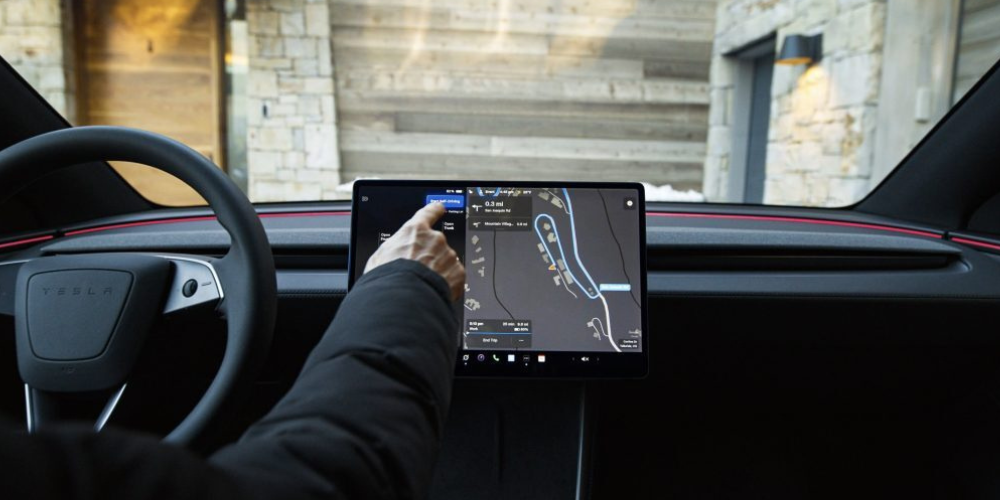
Why Tesla’s Promise of Unsupervised Driving Is Facing Major Roadblocks
For years, Tesla’s promise of Full Self-Driving (FSD) has stood at the center of excitement, debate, and expectation. What started as a bold vision in 2016 has slowly turned into a complex engineering and legal challenge.
The turning point came during Tesla’s 2026 Q1 earnings call, when Elon Musk addressed a limitation that reshaped the conversation around autonomy. The discussion revealed a gap between early promises and what current hardware can actually deliver.
The moment carried weight because it touched long-standing customer expectations, technical constraints, and financial exposure all at once.
A Turning Point in Tesla’s Autonomy Claims
During the earnings call, Musk addressed the long-running goal of unsupervised Full Self-Driving, first introduced to Tesla buyers in October 2016. The message was direct and difficult to miss.
“I wish it were otherwise,” Musk stated. “But Hardware 3 simply does not have the capability to achieve unsupervised FSD.”
That admission centered on Hardware 3, the computing system Tesla introduced in 2019, designed with the intent of supporting full autonomy. At the time, it was positioned as the backbone of Tesla’s self-driving future. However, expectations shifted as development progressed.

Instagram | wealthclassy | Musk confirmed that Tesla’s Hardware 3 is incapable of supporting unsupervised FSD.
Musk added further context, saying, “We did think at one point it would have that capability, but relative to Hardware 4, it has only one-eighth the memory bandwidth, [and] memory bandwidth is one of the key elements needed for unsupervised FSD.”
The statement clarified a growing gap between older vehicles and newer systems, raising questions about what had been realistically deliverable from the beginning.
Hardware 3 vs Hardware 4 Gap
The distinction between Tesla’s hardware generations has become central to understanding the current situation. Hardware 3, deployed across millions of vehicles, now appears limited compared to Hardware 4 in key performance areas, especially memory bandwidth.
That bandwidth difference—described by Musk as a one-eighth fraction compared to newer systems—affects how quickly and efficiently the system can process visual and sensor data needed for autonomous decision-making.
Key differences include:
Hardware 3: earlier computing architecture, lower memory throughput
Hardware 4: higher processing capacity, designed for advanced autonomy tasks
Core issue: real-time interpretation of complex driving environments
These limitations directly impact Tesla’s ambition to reach Level 4 or Level 5 autonomy using a vision-based system.
What Tesla Plans for Affected Owners
Tesla has outlined steps intended to address the gap for customers who purchased Full Self-Driving packages on Hardware 3 vehicles. The approach includes trade-in options and hardware upgrades, though the process carries additional complexity.
Musk explained, “For customers that have bought FSD, what we’re offering is essentially a discounted trade-in for cars that have Hardware 4.”
Beyond trade-ins, Tesla also plans to offer hardware upgrades. However, the transition is not a simple component swap. Musk noted, “You also need to replace the cameras to go to Hardware 4.”
To manage scale, Tesla expects to establish “micro factories or small factories in major metropolitan areas” to handle conversions efficiently. The long-term goal, according to Musk, is to transition all Hardware 3 vehicles to Hardware 4, enabling them to support future robotaxi deployment and unsupervised FSD capabilities.
That plan introduces logistical and manufacturing complexity across millions of vehicles already on the road.
Financial Strain Building Around the Issue
The scale of Tesla’s Hardware 3 fleet adds significant financial weight to the situation. Around 4 million vehicles were produced with Hardware 3 between April 2019 and early 2023. Early estimates suggest that upgrading each vehicle could cost between $1,500 and $2,000.
When multiplied across the fleet, the total exposure becomes substantial.
At the same time, Tesla’s financial position shows pressure. The company reported $477 million in net income for the first quarter of 2026, marking one of its weaker quarterly profit results in five years despite a 17% year-over-year increase. Inventory levels also added strain, with roughly 50,000 unsold vehicles reported at the end of the quarter.
These factors together highlight a tighter operating environment while long-term upgrade costs remain unresolved.
Different Philosophy in Autonomous Driving

Instagram | techau | Tesla pursues a vision-only autonomy strategy, relying solely on cameras and AI instead of radar or sensors.
Tesla’s approach to autonomy has centered on a vision-only strategy, relying on cameras and artificial intelligence as the primary input system. Since 2021, the company has gradually reduced reliance on radar and ultrasonic sensors, aiming to mirror human driving perception through visual data alone.
Musk has consistently argued that since humans rely primarily on vision and neural processing, vehicles should follow a similar model.
However, other automakers take a different direction.
Mercedes-Benz, for example, developed its Drive Pilot system with a multi-sensor strategy. Gregor Kugelmann, senior development manager for the system, explained, “Our philosophy is to have redundancies.”
Drive Pilot integrates long-range radar, lidar, cameras, and additional data sources. These include acoustic inputs that detect road spray, identify wet conditions, and pick up siren sounds from emergency vehicles through cabin microphones. Ultrasonic sensors also contribute to low-speed awareness.
The system achieved Level 3 approval in 2022, marking a legally recognized milestone in conditional autonomy.
Safety and Redundancy Debate
The core difference between Tesla and competitors like Mercedes-Benz lies in redundancy. While Tesla relies heavily on visual interpretation, others build overlapping sensor systems designed to handle conditions where cameras may struggle.
Kugelmann emphasized this approach, stating, “The combination of radar, lidar, and stereo camera technologies gives us the best and the safest sensor set needed for Level 3 autonomous driving.”
Mercedes engineers also test systems under challenging conditions, including heavy spray simulations and low-sun glare scenarios that reduce visibility for both humans and machine vision systems.
These tests highlight a key concern: environments where a single-sensor approach may face limitations.
The broader question now centers on whether Hardware 4, even with higher processing capability, can safely deliver unsupervised driving at scale without additional sensing layers. That uncertainty shapes how regulators, competitors, and customers evaluate the path forward.
Tesla’s push toward unsupervised Full Self-Driving now sits at a critical intersection of engineering limits, financial responsibility, and safety expectations. The acknowledgment that Hardware 3 cannot support true autonomy reshapes years of messaging around capability and timeline.
With millions of affected vehicles, significant upgrade costs, and ongoing debate over sensor strategy, the next phase of Tesla’s autonomy program will depend not only on computing power but also on whether its vision-only approach can meet real-world safety demands.
More inDriving
-
`
 Is Running Your AC All Day Saving Money or Raising Energy Bill?
As temperatures climb, air conditioners become one of the hardest-working appliances in many homes. A common belief is that keeping an...
June 21, 2026 -
`
 Everything You Ought to Know About Car Insurance in Texas
Texas drivers cover millions of miles every day. They go through packed highways in Houston, long stretches of interstate roads in...
June 18, 2026 -
`
 Why Liability Auto Insurance Is Required but Full Coverage Isn’t
Car insurance rules often feel uneven. One part is enforced by law, while another is left to personal choice or financial...
June 14, 2026 -
`
 Mitsubishi Ends its U.S. Pickup Hiatus With Nissan-sourced Truck Aimed at Toyota Tacoma & Chevy Colorado
Mitsubishi is getting ready for a major comeback in the United States. After years of sitting on the sidelines in key...
June 12, 2026 -
AISD-77 fallback smoke aisd-77-smoke-72138678
Verifying the WordPress publisher’s auth-fallback cascade. This draft post can be deleted.
June 10, 2026 -
AISD-77 fallback smoke aisd-77-smoke-7c83fc49
Verifying the WordPress publisher’s auth-fallback cascade. This draft post can be deleted.
June 10, 2026 -
`
 Android Auto’s Next Update Signals a Major Shift in In-Car Experience
Driving interfaces are starting to feel less like basic infotainment systems and more like connected smart devices. Google’s latest Android Auto...
June 7, 2026 -
`
 Tesla Officially Launches Its Full Self-Driving (FSD) Package in China
Tesla has finally crossed a major hurdle in China. After years of regulatory roadblocks, speculation, and industry chatter, the company has...
June 6, 2026 -
`
 Magic Johnson’s Wealth Advice That Made Shaq O’Neal a Millionaire
Shaquille O’Neal made millions on the basketball court, but the real money came after the games ended. The turning point did...
May 30, 2026
More From CashRoadster
-
 Hyundai Gives Its Wild Baja Santa Fe Render the Green Light
The Hyundai Santa Fe is designed as a practical family SUV, but a new digital rendering gives it a very different...
Auto NewsAugust 30, 2026 -
 Andy Green and JCB Set New Hydrogen Speed Record of 406 MPH
Hydrogen power just had a very fast day in Utah. British land speed legend Andy Green drove the JCB Hydromax to...
DrivingAugust 27, 2026 -
 Ford Reveals “Fathom,” Its New Electric Truck With a $29,945 Price Tag
Ford is preparing a new electric pickup called the “Fathom,” with a planned starting price of $29,945 after destination. The truck...
DrivingAugust 22, 2026 -
 The Median Net Worth for Americans at Age 40 is Roughly $135k, Survey Shows
Turning 40 can make money feel more serious. Retirement no longer seems impossibly far away, housing costs may be substantial, and...
AdviceAugust 20, 2026 -
 Michigan Woman Loses $1,000 in Ghost Tapping Payment Scam
Contactless payments have made shopping faster than ever, but scammers are finding new ways to misuse the same technology. A recent...
AdviceAugust 15, 2026
You must be logged in to post a comment Login