
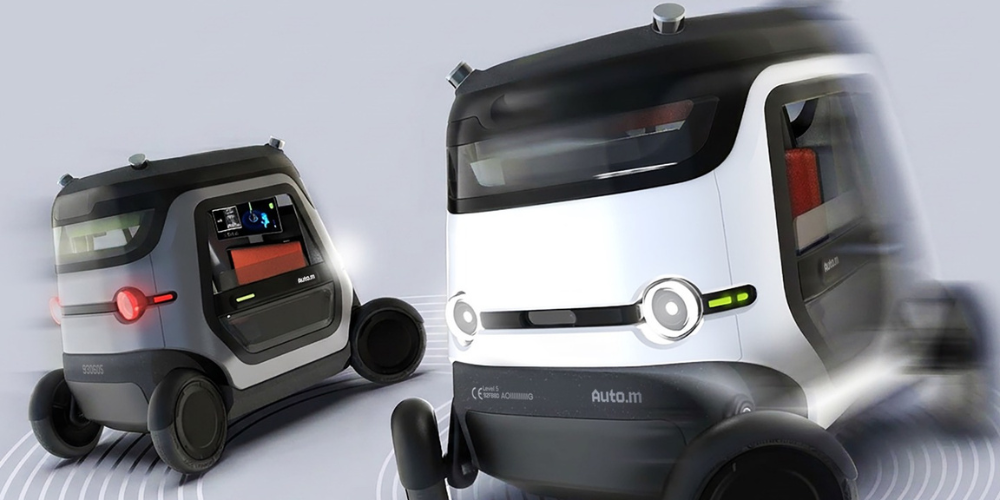
Auto.m Autonomous Taxi Concept Wins 2026 Red Dot Award
Cities are exploring new ways to improve transportation as demand grows for cleaner, smarter, and more convenient mobility solutions. Autonomous vehicles are becoming a major part of this shift, with designers imagining cars that can move people without traditional controls.
One such idea is Auto.m, a compact autonomous taxi concept created to show how future urban transportation could look.
Designed by Alejandro Otálora, Head of Global Design & Product Innovation at robot.com, Auto.m is an autonomous taxi concept created to explore the future of urban electric mobility. The San Francisco-based designer started developing the project in 2019 and introduced it publicly in 2026.
With a background in robotics and product innovation, Otálora created Auto.m to showcase how autonomous technology could reshape city transportation. The concept later received the 2026 Red Dot Award, highlighting its unique approach to combining self-driving technology, compact vehicle design, and sustainable mobility ideas.
Although Auto.m is still a concept, it presents a possible direction for future electric taxi solutions.
Built for Autonomous City Travel

Instagram | alejandro_otalora1 | Designed by Alejandro Otálora, Auto.m is a futuristic autonomous electric taxi concept for urban mobility.
Auto.m focuses on Level 5 autonomous driving, which represents a future where vehicles can operate without human control. Unlike current driver-assistance systems that still require drivers to monitor the road, Level 5 autonomy aims for complete vehicle independence.
The concept removes traditional driving elements such as a steering wheel and dashboard. Instead, passengers receive a digital interface supported by an artificial intelligence assistant. This setup allows riders to use travel time for relaxing, working, or even resting during their journey.
The cabin follows a minimalist approach with seating designed for two passengers. Removing unnecessary components creates more usable space inside the small vehicle while keeping the exterior footprint compact.
Auto.m measures 225.8 cm (88.9 inches) in length, 160.6 cm (63 inches) in width, and 182.5 cm (71.9 inches) in height. These dimensions make it suitable for busy city streets where parking space and road width can be limited.
The design takes inspiration from small urban vehicles such as the Fiat Topolino, Renault Twizy, and Citroën Ami. Its tall, box-shaped structure helps maximize interior room while maintaining a small footprint.
The unusual vertical design gives Auto.m a distinctive appearance. The tall cabin shape creates a different visual identity compared with traditional cars, focusing more on practicality and passenger space than conventional styling.
Advanced Wheel Technology
One of Auto.m’s unique features is its wheel positioning system. According to the concept details, the wheels can adjust their position, allowing the vehicle to make extremely tight turns and move easily through narrow areas.
This technology could help autonomous taxis operate in crowded urban environments, especially in older European cities where streets are often narrow and parking spaces are limited.
The system also allows the vehicle to perform low-speed rotational movements, helping it fit into smaller parking spaces without requiring large turning areas.
Sustainable Materials and Electric Power
Auto.m is designed as an electric vehicle, supporting cleaner transportation by reducing emissions from city travel. Electric operation would also provide quieter movement, which could help lower noise pollution in urban areas.
The concept also includes the use of recycled materials such as plastics and rubber. These materials could potentially be used for body panels, interior components, or other structural sections.

Instagram | alejandro_otalora1 | Auto.m promotes sustainable urban mobility through zero-emission, low-noise electric power.
Another design element mentioned in the concept is frosted glass. This feature could improve passenger privacy since autonomous vehicles remove the need for drivers to maintain outside visibility. The glass design could also create a more comfortable private space for riders.
The top section of Auto.m includes sensor modules positioned around the vehicle. These systems would help the taxi understand its surroundings and safely move through city environments.
Although specific hardware details have not been confirmed, autonomous vehicles commonly use technologies such as LiDAR, radar, sonar, GPS, and cameras. These systems work together to detect objects, monitor road conditions, and support automated driving decisions.
The compact structure allows these technologies to be placed around the vehicle while maintaining a clean exterior design.
Autonomous Transportation Future Possibilities
Auto.m does not currently have confirmed production plans, battery specifications, driving range details, or performance numbers. Those aspects would depend on future development, engineering testing, and financial support.
The concept highlights how future taxis could become smaller, smarter, and more focused on passenger comfort. By combining autonomous driving, electric power, and sustainable materials, Auto.m presents an example of how urban mobility could change in the coming years.
Auto.m represents a vision for a new type of city vehicle built around automation and efficiency. The concept combines compact design, electric technology, and autonomous features to address modern transportation challenges.
While it remains a design study, its award-winning approach shows how future mobility concepts are moving beyond traditional cars. Projects like Auto.m offer a glimpse of possible transportation solutions where vehicles are designed around passengers rather than drivers.
More inAuto News
-
`
 Why ‘Super Commuting’ Is Becoming a New Normal in Northern California
For thousands of workers across Northern California, a long drive to work is no longer an occasional inconvenience. It has become...
July 3, 2026 -
`
 Why Advanced Headlights Used Worldwide Are Still Restricted in America
Night driving was once associated with quieter roads and a calmer driving experience. Today, many motorists face a different reality. Intense...
June 28, 2026 -
`
 How 2026 Graduates Can Establish a Solid Financial Ground for Future Decades
Graduation marks the beginning of a new financial chapter filled with opportunities, responsibilities, and choices that can shape the future. The...
June 26, 2026 -
`
 Is Running Your AC All Day Saving Money or Raising Energy Bill?
As temperatures climb, air conditioners become one of the hardest-working appliances in many homes. A common belief is that keeping an...
June 21, 2026 -
`
 Everything You Ought to Know About Car Insurance in Texas
Texas drivers cover millions of miles every day. They go through packed highways in Houston, long stretches of interstate roads in...
June 18, 2026 -
`
 Why Liability Auto Insurance Is Required but Full Coverage Isn’t
Car insurance rules often feel uneven. One part is enforced by law, while another is left to personal choice or financial...
June 14, 2026 -
`
 Mitsubishi Ends its U.S. Pickup Hiatus With Nissan-sourced Truck Aimed at Toyota Tacoma & Chevy Colorado
Mitsubishi is getting ready for a major comeback in the United States. After years of sitting on the sidelines in key...
June 12, 2026 -
AISD-77 fallback smoke aisd-77-smoke-72138678
Verifying the WordPress publisher’s auth-fallback cascade. This draft post can be deleted.
June 10, 2026 -
AISD-77 fallback smoke aisd-77-smoke-7c83fc49
Verifying the WordPress publisher’s auth-fallback cascade. This draft post can be deleted.
June 10, 2026
More From CashRoadster
-
 How Much Money Should You Keep in an Emergency Fund?
With everyday expenses remaining high across the U.S. in 2026, an emergency fund can provide a needed buffer when an unexpected...
AdviceSeptember 13, 2026 -
 How Staying With the Same Car Costs You More in Insurance
Loyalty usually sounds like something a company should reward. Stay with the same business for years, pay your bills on time,...
Car InsuranceSeptember 11, 2026 -
 State Farm Is Sending Out $5 Billion in Dividends. Here’s Who Qualifies
After several years of rising auto insurance costs, some State Farm customers are now getting money back. State Farm has started...
Car InsuranceSeptember 6, 2026 -
 Nissan’s Big Bet on Aggressive Discounts Is Fueling Sales As Competitors Pull Back
Nissan is spending more money to get buyers into its cars, and the strategy is producing results. While several major rivals...
Auto NewsSeptember 3, 2026 -
 Hyundai Gives Its Wild Baja Santa Fe Render the Green Light
The Hyundai Santa Fe is designed as a practical family SUV, but a new digital rendering gives it a very different...
Auto NewsAugust 30, 2026
You must be logged in to post a comment Login